Sign up for our newsletter to get 10% off for the week!


Bamboo vs Cotton Muslin Baby Blankets
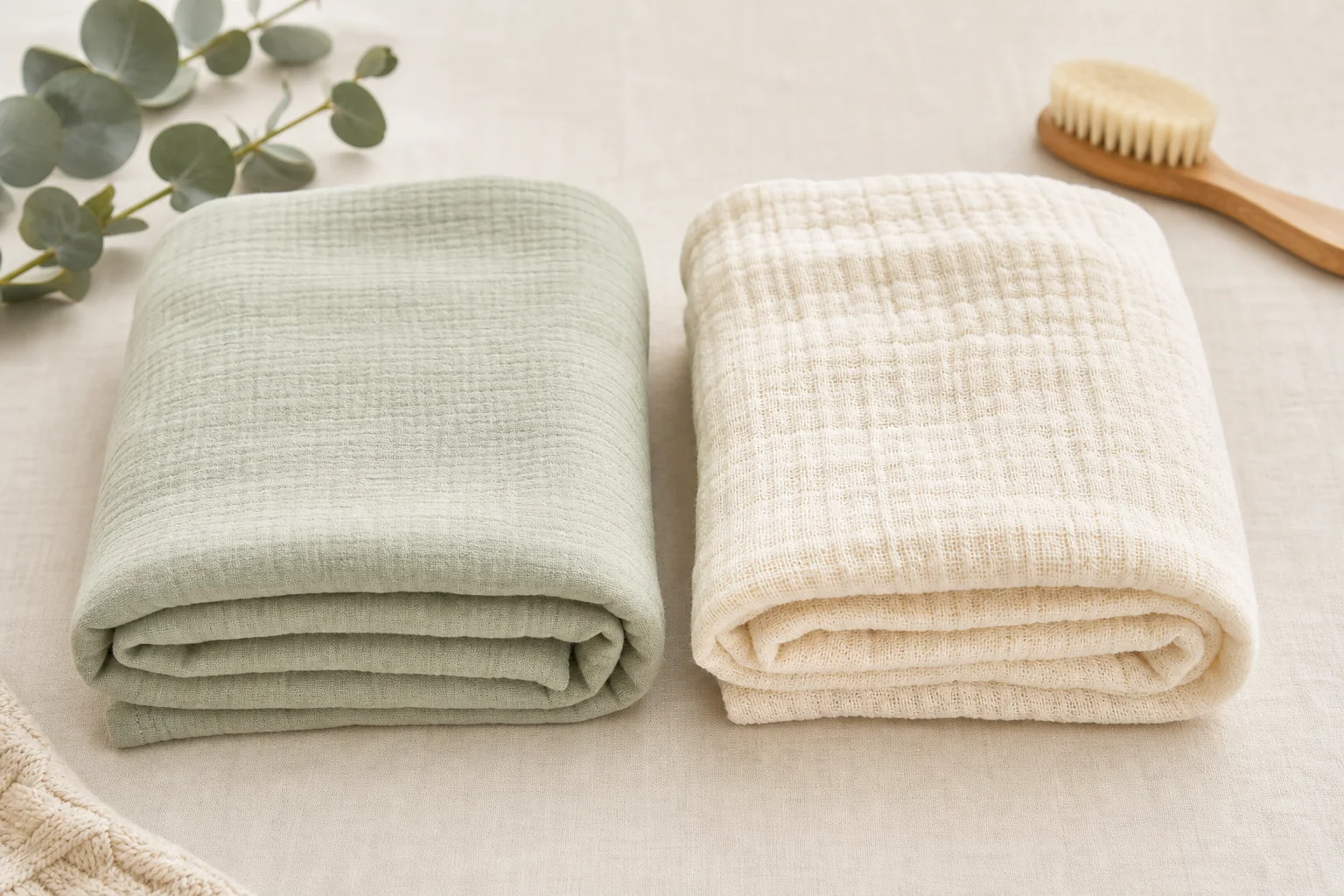
Short answer: Neither bamboo-derived nor cotton muslin is automatically better. Compare the exact fiber blend, weave, layers, dimensions, finish, and care label. Those product details affect feel and use more than the category name alone.
Bamboo and cotton muslin blankets can look almost identical in a product photo. In your hands, they may feel quite different. Fiber matters, but so do the weave, number of layers, size, finish, and washing directions. Check the whole product listing before deciding.
Muslin is a weave, not a single material
Muslin is an open-weave fabric. Manufacturers can make it from cotton, bamboo-derived fibers, or a blend. That is why two products labeled “muslin” may not have the same weight or texture.
Start with the material line, then check the layer count and dimensions. A single-layer square can feel light and airy. A multi-layer blanket usually feels fuller and may suit a different use.
What to expect from bamboo muslin
Bamboo muslin is often chosen for its smooth drape and light feel. Still, “bamboo” on its own is not enough information. Look for the exact fiber composition because a blended fabric can behave differently from one made entirely with bamboo-derived fiber.
Read the care label too. Some products allow machine washing and tumble drying, while others need a gentler cycle or lower heat. The individual label wins over general internet advice.
What to expect from cotton muslin
Cotton muslin is common in blankets, swaddles, and burp cloths. It can be crisp at first and soften after washing, but the result depends on the product and its finish. Cotton muslin also comes in several weights, from light single-layer fabric to thicker constructions.
If you are comparing options in our baby blanket collection, open each product page side by side. Compare material, dimensions, layers, and care instructions rather than relying on the category name.
Size and layers change how a blanket works
A 30 x 40-inch blanket is not interchangeable with a 47 x 47-inch square. The smaller size may be convenient for supervised stroller use or travel. A larger square offers more coverage and may also be sold for swaddling, depending on the manufacturer’s instructions.
Layer count affects bulk and drape. More layers do not automatically make a blanket better. They simply make it different. Think about where the family will use it, how often it will be washed, and whether compact storage matters.
Care and infant sleep safety
Wash the blanket according to its attached label and inspect the seams after laundering. Stop using it if the fabric tears or loose threads appear.
Loose blankets do not belong in an infant sleep space. The CPSC safe-sleep guidance recommends a firm, flat sleep surface with only a fitted sheet. Keep blankets and other soft items out of the crib, bassinet, or play yard while a baby sleeps.
Quick comparison
| Detail | Bamboo-derived muslin | Cotton muslin |
|---|---|---|
| Label | Check whether it is viscose, rayon, or a blend | Check whether it is cotton or a cotton blend |
| Feel | Often smooth and drapey, but finish and weave vary | May feel crisp or soft depending on finish and washing |
| Care | Follow the product label | Follow the product label |
| Decision | Compare layers, dimensions, construction, and intended use | |
For more detail on weave, sizing, care, and swaddling, read our muslin swaddle blanket guide.
Frequently asked questions
Is bamboo muslin always softer than cotton?
No. The blend, weave, finish, layers, and washing history all affect the feel.
Which one is easier to wash?
Either can be easy to care for. Use the washing and drying directions on the specific product label.
Can a muslin blanket be used for infant sleep?
Do not place a loose blanket in an infant sleep space. Follow current CPSC guidance and the product manufacturer’s instructions.